
Reliance Industries Ltd on Friday reported a 2.4 per cent rise in its March quarter net profit as store rationalisation in retail business and improved margins in telecom helped offset weakness in mainstay oil and petrochemicals business and higher finance cost. Consolidated net profit of Rs 19,407 crore, or Rs 14.34 per share, in January-March - the fourth quarter of April 2024 to March 2025 fiscal (FY25) - was higher than Rs 18,951 crore, or Rs 14 a share, in the same period a year back, the company said in a statement.

From the Sensex pack, Asian Paints, Tech Mahindra, Tata Consultancy Services, Bajaj Finserv, Adani Ports, HCL Technologies, Bharti Airtel, Infosys, Trent, Reliance Industries, UltraTech Cement, Sun Pharmaceuticals, Eternal, Titan and Bajaj Finance were the gainers. On the other hand, Tata Steel, Tata Motors Passenger Vehicles, Tata Motors Commercial Vehicles, Bharat Electronics, Kotak Mahindra Bank and PowerGrid were the laggards.
India has gained the least since Russia invaded Ukraine in February 2022 and was penalised the most, while the US, China and the European Union emerged as the biggest beneficiaries from the war.

Billionaire Mukesh Ambani on Thursday unveiled the next phase of growth at Reliance Industries Ltd, with retail and telecom worth over $100 billion each, doubling revenues and pre-tax profit in 3-4 years, new energy business becoming profitable by 2031, and core oil and chemical business continuing to be the robust growth engine. The sprawling conglomerate with interests in refining, oil and gas, petrochemicals, telecom, retail, and media is on track to more than double in size before the end of the decade, Ambani, chairman and managing director of Reliance, told company shareholders.

Asia's richest man Mukesh Ambani drew nil salary from his oil-to-telecom-and-retail conglomerate Reliance Industries for the fifth year in a row and dividends remain his main source of earnings. Ambani, 68, had capped his annual remuneration at Rs 15 crore from financial year 2008-09 (April 2008 to March 2009) to 2019-20 (FY20); and since FY21, he opted to forego his salary, due to COVID-19 pandemic, until the company and all its businesses were fully back to their earnings potential.

Noting that recent uncertainties created by global tariffs have not impacted the Indian economy severely, Anuradha Thakur, secretary, Department of Economic Affairs, said the central government is hopeful that the recent goods and services tax (GST) rationalisation will ignite the much needed animal spirits in the financial sector.

Billionaire Mukesh Ambani-promoted Reliance Industries Ltd (RIL) on Tuesday became the first listed company to hit the Rs 20 lakh crore market valuation mark. The market heavyweight's stock jumped 1.88 per cent to its record high of Rs 2,957.80 apiece on the BSE. It finally settled at Rs 2,928.95 per piece, up 0.90 per cent on the bourse.

Reuters reported earlier this week that the Competition Commission of India (CCI) has sent a warning notice to the companies expressing concern that the merged entity will effectively have a monopoly on cricket broadcast rights worth billions of dollars, allowing it to squeeze advertisers.

Indian graduates face tougher English tests, shorter post-study stays, higher costs and stricter settlement rules as Britain rolls out sweeping immigration reforms.

'Our problem is not a budget deficit but a trust deficit. We need to trust our institutions and industries to innovate and lead. That is the way forward for India.'

The key assets put on the block include its entire stake in Reliance General Insurance Company, the third-largest private sector insurer, and a 49 per cent stake in Reliance Nippon Life Insurance, a joint venture with Nippon Life, which is among the top five private-sector insurance companies.
ITC's move to hive off its hotel business will have implications for passive funds and exchange traded funds (ETFs) similar to that seen during the Reliance Industries-Jio Financial demerger. As ITC is part of popular indices such as Nifty and Sensex, it is held by several index funds and ETFs.

Ask rediffGURU and PF, MF and insurance expert Purshotam Lal your mutual fund, insurance and personal finance-related questions.
From just 0.2 per cent before the Russia-Ukraine war to now accounting for 35-40 per cent of total crude imports, India's reliance on Russian oil has surged -- drawing fresh scrutiny with US President Donald Trump announcing a penalty on top of a 25 per cent tariff, or tax, on all goods going to the US.

CAG warns most states of fiscal imprudence as March spending overshoots limits, with key departments exhausting large portions of budgets in the last month of FY24.

'Such stocks may be useful for aggressive portfolios, but should not be part of the core holdings.'

M&M was the biggest gainer on the Sensex chart, rising 5.97 per cent, followed by JSW Steel, Ultra Cement, Kotak Bank, ITC and NTPC. Reliance Industries gained 0.73 per cent to close at Rs 2,871 apiece. In contrast, TCS, HCL Tech, HUL, Nestle Industries, Bajaj Finserv, Wipro and Infosys were among the losers.

Jane Street could do what they did because of the most fundamental flaw in the Indian stock market: a fragmented, fractured, fissured, fistula-ed liquidity stream, points out Shankar Sharma.
At market close, the oil-to-telecom conglomerate's market capitalisation (m-cap) zoomed to Rs 10,01,555.42 crore on BSE.

Four of the 10 most valued domestic firms together added a whopping Rs 231,320.37 crore in market valuation last week, with market heavyweight Reliance Industries contributing the most to the overall gains. Last week, the Sensex jumped 884.57 points or 1.61 per cent. While TCS, Infosys and ICICI Bank were the other gainers from the top-10 pack, HDFC Bank, HUL, LIC, SBI, HDFC and Bharti Airtel faced erosion from their market valuation.

From the Sensex firms, Eternal climbed 3.32 per cent. Bharti Airtel, IndusInd Bank, Tech Mahindra, Reliance Industries, Tata Motors, HDFC Bank, Tata Steel and Hindustan Unilever were the other major gainers. However, Bajaj Finserv, Axis Bank, Tata Consultancy Services, Titan and Larsen & Toubro were among the laggards.

Shares of RIL surged 4.42 per cent to its all-time closing high of Rs 1,082.20 on BSE.

'Government officials use Gmail and ordinary phones without basic security consciousness.' 'Interoperability, especially in joint exercises with countries like the US, worries me.' 'It often means we open our systems to them, but they don't reciprocate.' 'They could have kill switches in their systems and might even be able to affect ours.'

At the same time, seven companies from the coveted list witnessed a decline in their market valuation last week, but their cumulative loss of Rs 37,701.1 crore was less than the total gain made by three firms.
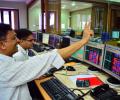
From the Sensex pack, HCL Tech, Infosys, Tech Mahindra, Reliance Industries, Bajaj Finserv, ICICI Bank, Tata Motors and Eternal were the lead gainers. Power Grid, Adani Ports, IndusInd Bank, Nestle, HDFC Bank and Hindustan Unilever were among the laggards.

The Securities and Exchange Board of India (Sebi) is set to introduce key reforms aimed at facilitating smoother mega initial public offerings (IPOs). Key among the proposals is a reduction in the quota reserved for individual investors - those applying for less than Rs 2,00,000 per application - from the current 35 per cent to 25 per cent for large IPOs (issue size above Rs 5,000 crore).
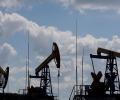
Billionaire Mukesh Ambani's Reliance Industries Ltd is estimated to have earned 724 million euros (about Rs 6,850 crore) from exporting fuel made from Russian crude oil to the US in one year, an European think tank said in a report. "From January 2024 to the end of January 2025, the US imported EUR 2.8 billion of refined oil from six refineries in India and Turkey that process Russian crude.

Glimpses from India and around the world that will make you smile and cry.

For the full 2016-17 fiscal, the company generated its highest ever annual profit at Rs 29,901 crore. The annual profit was 18.8 per cent higher than the previous year's.

The company had announced similar pricing for Sri Lanka, where its application was in advanced stages of regulatory clearance.

The impending merger between Housing Development Finance Corporation (HDFC) with HDFC Bank may create challenges for large-cap fund managers, most of whom are already grappling to match the returns generated by their benchmarks. The combined weight following the merger in the benchmark Sensex and Nifty 50 indices is likely to be much higher than permissible limits for active mutual fund (MF) schemes. This could have a bearing on the performance of large-cap funds if HDFC Bank shares outperform the markets, as the schemes will be forced to remain underweight on the stock to adhere to the single-stock cap.

Riding on a strong stock market rally, Anil Ambani-led diversified business conglomerate Reliance Group has crossed Rs one lakh crore market valuation.

From the Sensex firms, Eternal, ICICI Bank, Bharti Airtel, Sun Pharma, State Bank of India, Bajaj Finserv, Kotak Mahindra Bank and Reliance Industries were among the biggest gainers. Tech Mahindra and Maruti were the laggards.

The Anmol effect: R-Cap shares jump 40% since junior Ambani joined the board

Among the Sensex firms, HDFC, HDFC Bank, Mahindra & Mahindra, Kotak Mahindra Bank, Bharti Airtel, Tata Motors, Reliance Industries and Maruti were the biggest laggards. Bajaj Finance, State Bank of India, NTPC, Hindustan Unilever, Titan, Infosys, Bajaj Finserv, Wipro, Asian Paints and Tata Consultancy Services were among the major gainers.

Indian equity benchmarks rose nearly 2 per cent on Thursday, capping a truncated trading week with their strongest weekly performance in over four years. The rally was sparked by renewed risk-on sentiment following progress in trade negotiations and expanded tariff exemptions.

From the Sensex pack, Reliance Industries, Bajaj Finserv, HDFC Bank, Adani Ports, Maruti Suzuki India, Axis Bank, Hindustan Unilever, Sun Pharmaceuticals and Asian Paints were among the laggards. Reliance Industries fell the most by 2.38 per cent to close at Rs 1,171.10 apiece.

From the Sensex pack, Zomato jumped over 7 per cent. ICICI Bank, Mahindra & Mahindra, Tata Motors, Larsen & Toubro, Asian Paints, Titan, Kotak Mahindra Bank and State Bank of India were among the gainers. However, Bajaj Finserv, Bharti Airtel, Tech Mahindra and Reliance Industries were the laggards.

Equity market capitalisation dropped to a seven-month low in February, with the top 10 companies losing a whopping Rs 3,33,307.62 crore in market valuation last week. The total equity market capitalisation (m-cap) in February 2022 stood at Rs 2,49,97,053.39 crore. The previous low was in July 2021, when the m-cap of BSE-listed companies was at Rs 2,35,49,748.9 crore. In January, the m-cap stood at Rs 2,64,41,207.18 crore.

'Selling could further intensify and take the index towards 22,800-22,750 in the near-term.'
